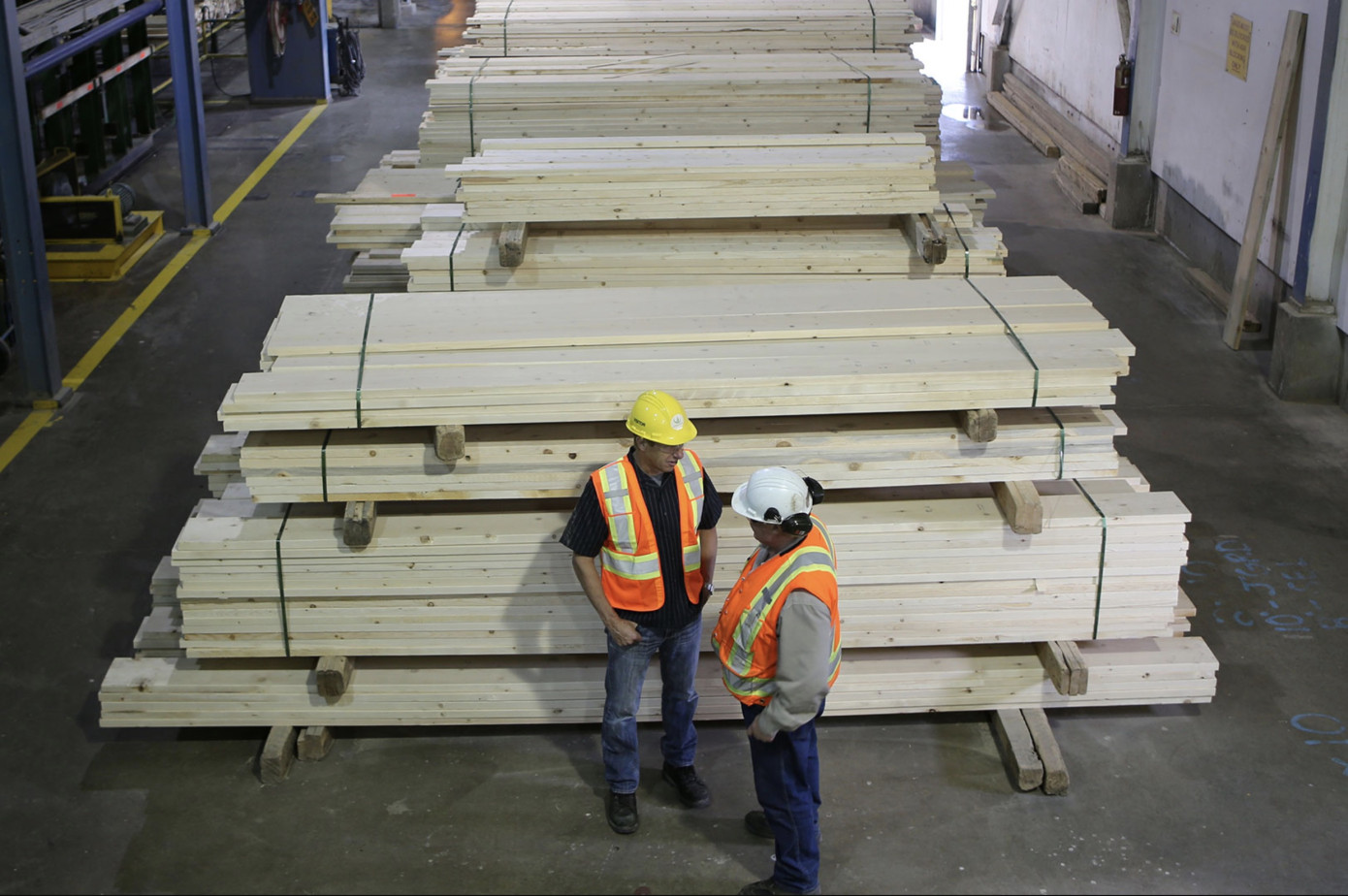
Conifex Timber Inc., a Canadian lumber producer with a sawmill and biomass power plant in Mackenzie, British Columbia, has secured a Government of Canada loan of up to $30 million to support operations and provide additional liquidity as it works toward a recovery in the lumber market, company announced.
The Large Enterprise Tariff Loan facility has a seven-year term and carries a market-based interest rate. It is secured by substantially all of Conifex’s property, with portions ranking either equally with or junior to the company’s existing secured lenders.
Conifex plans to use the financing as it works to reestablish normal two-shift operations at its Mackenzie sawmill. The company plans a restart that would bring employees back to work and resume production of lumber and renewable electricity.
The company’s existing lumber lender has also agreed to reimburse Conifex for up to $11 million in capital expenditures designed to improve operating performance and EBITDA at the Mackenzie mill.
In connection with the federal loan, Conifex has agreed to issue common share purchase warrants to the Canada Enterprise Emergency Funding Corporation. The number of warrants, exercise price, term and other material terms will be established in definitive warrant documentation.
Conifex has also agreed to issue PenderFund up to 1.58 million additional common share purchase warrants. Each warrant will be exercisable for one common share at $0.50 and will expire on January 17, 2031.
The company will also extend the expiry of PenderFund’s existing 4.32 million warrants by one year to January 17, 2031. The warrant transactions remain subject to Toronto Stock Exchange approval.
The financing follows a period of reduced production and losses at Mackenzie. Conifex reported a second-quarter net loss of C$10 million, compared with C$8 million a year earlier, as reduced operating rates and higher U.S. trade costs affected its business. EBITDA was negative C$6 million, compared with negative C$3 million in the second quarter of 2025.
Conifex produced 14 million board feet of Western spruce-pine-fir lumber in the second quarter, down 60% from 35 million board feet a year earlier and 35% from 22 million board feet in the first quarter. The Mackenzie sawmill operated at about 23% of annualized capacity after Conifex temporarily curtailed production in May because of a shortage of available sawlogs during the seasonal spring breakup period.
The curtailment continued beyond the approximately seven weeks initially planned. Conifex had planned to restart the sawmill and its 36-megawatt biomass power plant after meeting restart conditions, including obtaining financing.
Second-quarter lumber shipments totaled 24 million board feet, down 39% from 39 million board feet a year earlier but up 10% from the first quarter. Shipments exceeded production as Conifex reduced finished-lumber inventories and kept its planer mill operating for several weeks after the sawmill curtailment.
Canadian softwood lumber producers are expected to face challenging market conditions through the rest of 2026 because of macroeconomic uncertainty, U.S. housing demand and trade conditions. Lumber prices improved during the first half, but volatility is expected to continue as producers adjust supply to demand. Several Canadian producers have curtailed production or reduced operating schedules, and further cuts may be required if demand recovers more slowly than expected.